
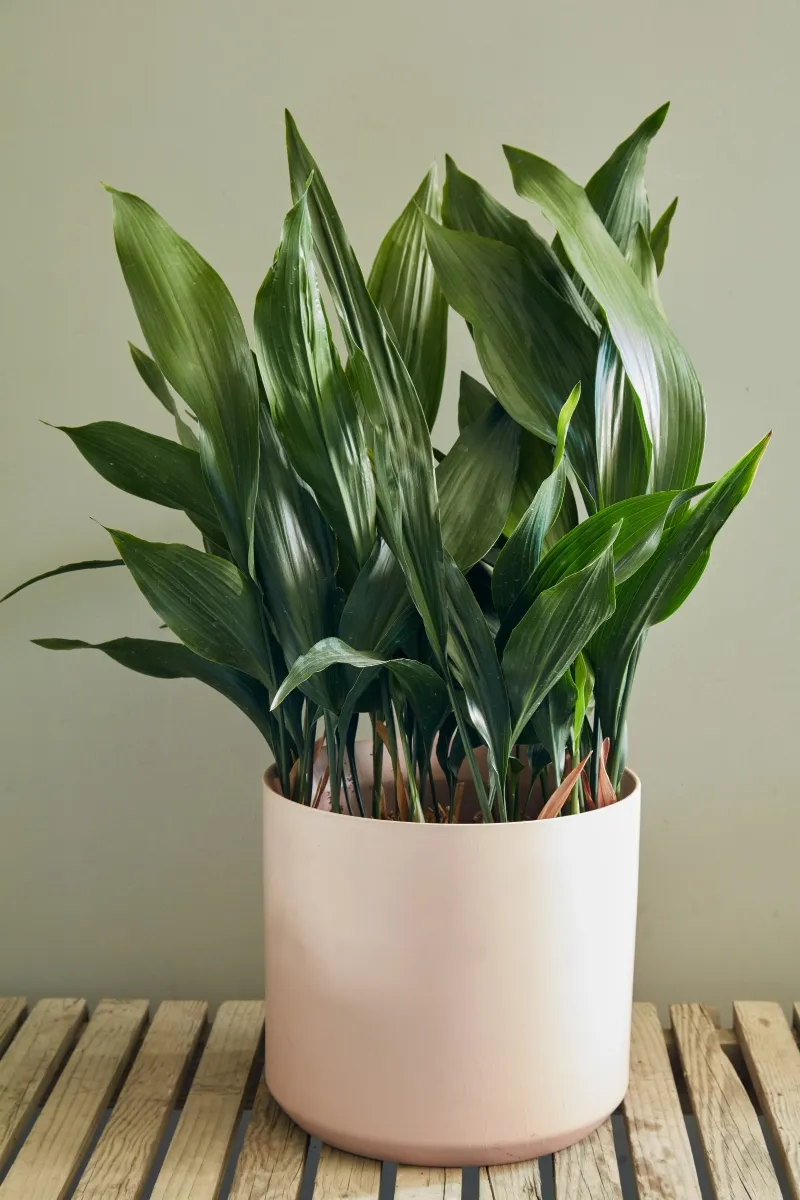
Aspidistra elatior
cast iron plant
Growing it outdoors
A favorite for deep shade. In the ground or in a pot, grows upright, slowly spreads. Tolerates neglect, low light.
 Height | 18–30in |
|---|---|
 Width | 12–18in |
 Tolerates | Cold, Drought, Narrow Planting, Pots, Neglect |
 Water needs | Low – Moderate |
Water this plant regularly and deeply when the top layer of soil is dry (down to an inch or so) to establish over several years and then every two to four weeks in dry months. Aspidistra will survive even less water, but won't look healthy and lush. | |
 Hardy to | 10°F |
 Exposure | Deep Shade – Part Sun |
 Plant traits | Foliage Feature, Grassy, Spreading, Tropical |
 Drainage | In Ground: Cactus Mix, In Pots: Cactus Mix, Tolerates Sandy Soil |
 Fertilizing | All Purpose |
 Origin | Japan |
 California native | No |
 Sunset zones | 4–9, 14–24 |
Growing Notes
A favorite for shade, this plant easily sunburns. Thin out old leaves yearly to keep the patch looking fresh.
Growing it indoors
| Height | 1–3ft |
|---|---|
| Width | 1–3ft |
| Water needs | When soil is mostly dry. |
Water when the soil is mostly dry, a couple of inches down in a larger pot. Cast iron plant forgives being forgotten for a while, but it looks lushest with steady watering. Let the water drain away; it doesn't like to sit wet. | |
| Exposure | Low Light – Bright Indirect |
| Plant traits | Foliage Feature, Grassy, Spreading, Tropical |
| Drainage | In Pots: Cactus Mix |
| Fertilizing | All Purpose |
| Origin | Japan |
Growing Notes
Remove old or tired leaves at the base each year to keep the plant looking fresh. It handles low light better than most houseplants. Wipe the leaves now and then to keep them glossy.
In stock today in Los Angeles
Outdoor sizes
| 3 gallon | 4 available | $49 |
Indoor sizes None in stock in Los Angeles today.
Special Interest
If you are patient and watchful you may find an aspidistra flower, which are quite unique. They bloom from underground and open at ground level, looking like a fleshy purple star anise seed pod. Occasionally they will bloom so low that looking into the flower is actually looking below soil level.
The above information reflects the observations of Grubb and Nadler and our extended plant community. We always consider input from fellow horticulturists and welcome feedback from those with additional information on the culture of this plant.
© 2020–2026 Grubb and Nadler. All rights reserved.